 Merken
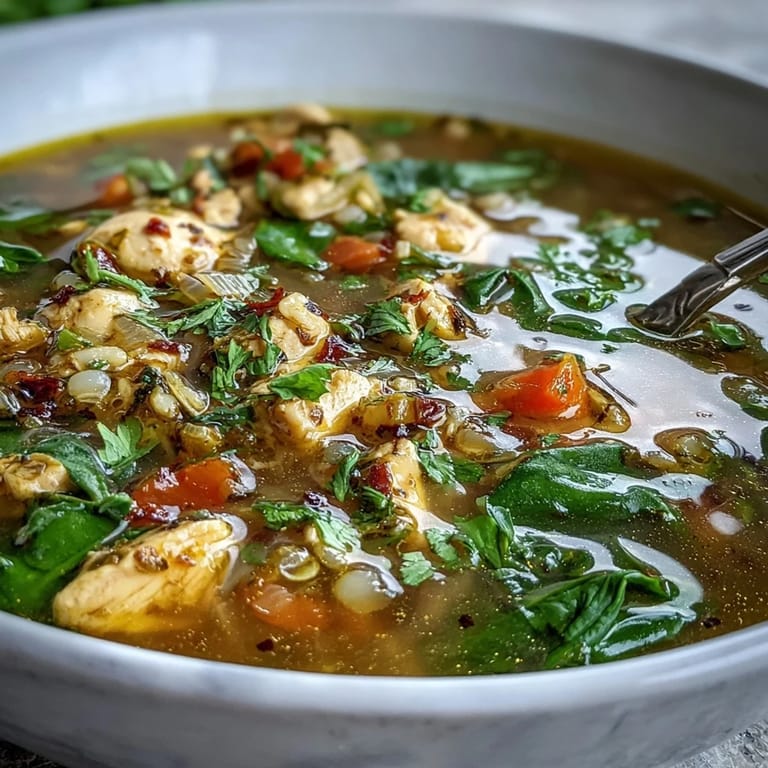
 There's something about the smell of turmeric hitting hot oil that immediately shifts the mood in my kitchen. I discovered this soup on a grey afternoon when I was hunting through my spice rack, feeling a bit run down, and realized I had everything needed to create something golden and restorative. The first spoonful—warm barley, tender chicken, that unmistakable warmth of turmeric—felt like a gentle hug from the inside. It became my go-to when I needed comfort that actually nourished, not just satisfied.
I made this for my sister after she had surgery, and watching her ask for seconds—something she hadn't done in weeks—made me realize that food really is medicine when made with intention. The warmth of the spices seemed to relax her shoulders, and she ended up calling me later that evening just to say how much better she felt. That's when I knew this wasn't just a recipe; it was something worth perfecting and sharing.
Ingredients
- Boneless, skinless chicken breasts (2, about 400 g), diced: Cutting them into bite-sized pieces means they cook fast and distribute evenly through the soup, so every spoonful has protein without tough, stringy bits.
- Pearl barley, rinsed (3/4 cup or 120 g): Rinsing removes starch and prevents mushiness; this grain becomes creamy without falling apart, giving the broth body and substance.
- Carrots (2 medium), peeled and diced: Their sweetness balances the earthiness of turmeric and cumin, plus they soften beautifully during the long simmer.
- Celery stalks (2), diced: This is your flavor foundation—don't skip it, as it creates depth underneath all the spices.
- Onion (1 medium), finely chopped: The base of everything; cooking it slowly until soft releases its natural sugars and mellows any sharpness.
- Garlic cloves (3), minced: Mince them small so they distribute throughout without overpowering any single bite.
- Zucchini (1 small), diced: Added near the end so it stays tender and doesn't turn mushy or absorb too much of the broth.
- Baby spinach leaves (100 g): Fresh greens wilt in at the last moment, preserving their brightness and nutritional punch.
- Low-sodium chicken broth (6 cups or 1.5 L): Low-sodium gives you control over the salt level; taste as you go rather than fighting overly salty broth.
- Olive oil (1 tbsp): Just enough to build flavor without making the soup heavy.
- Ground turmeric (1 1/2 tsp): This is the soul of the dish; blooming it in hot oil before adding other ingredients unlocks its warmth and earthiness.
- Ground black pepper (1/2 tsp): Enhances turmeric's absorption in your body and adds subtle heat.
- Ground cumin (1 tsp): Warm and slightly nutty, it echoes turmeric's golden warmth.
- Ground coriander (1/2 tsp): A whisper of citrus brightness that lifts the entire flavor profile.
- Bay leaf (1): Adds depth; remember to fish it out before serving or eat around it carefully.
- Salt (1/2 tsp, or to taste): Always taste and adjust at the end since broth saltiness varies by brand.
- Lemon juice (from 1/2 lemon): Squeezed in at the finish, this wakes up all the spices and prevents the soup from tasting flat.
- Fresh parsley, chopped, for garnish: A handful on top adds color, freshness, and a subtle peppery note that makes people notice.
Tired of Takeout? 🥡
Get 10 meals you can make faster than delivery arrives. Seriously.
One email. No spam. Unsubscribe anytime.
Instructions
- Build Your flavor base:
- Heat the olive oil in a large soup pot over medium heat until it shimmers, then add your onion, carrots, and celery. Let them soften for a full 5 minutes—you want them translucent and fragrant, not rushed. This foundation is where the soup's depth begins.
- Bloom the spices:
- Stir in the garlic, turmeric, cumin, coriander, and black pepper, cooking for exactly 1 minute until the kitchen fills with a warm, toasted aroma. This brief moment matters; it wakes up the spices and infuses the oil with their essence.
- Brown the chicken:
- Add your diced chicken and stir gently for about 3 minutes, just until the pieces lose their raw pink on the outside and show a light golden color. You're not searing it hard; you're simply sealing in flavor and ensuring even cooking.
- Bring it together:
- Pour in the chicken broth, add the rinsed pearl barley and bay leaf, and let the soup come to a rolling boil. Once it's bubbling, lower the heat to medium-low and let it simmer uncovered for 35 minutes—the barley needs this time to become tender and creamy.
- Finish with vegetables:
- Add the diced zucchini and simmer for another 10 minutes until the barley is soft and the chicken is completely cooked through. The zucchini will soften without dissolving, maintaining its subtle sweetness.
- Add brightness:
- Stir in the fresh spinach and cook for just 2 minutes until it wilts into the warm broth—overcooked spinach loses its vibrant color and nutrients. Remove from heat, fish out the bay leaf, and finish with salt to taste and a squeeze of fresh lemon juice.
- Serve and savor:
- Ladle into bowls and crown each one with chopped fresh parsley for color and a peppery freshness that makes the spices pop.
 Merken
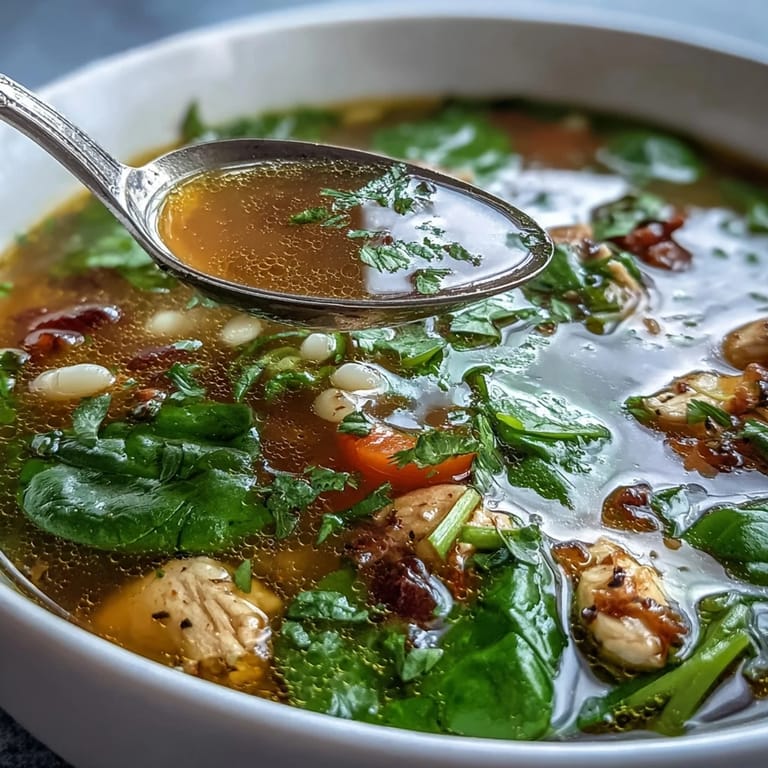
 I've learned that the best moments in the kitchen happen when you slow down enough to notice the small details—the moment the turmeric hits the oil and your whole body recognizes the scent as healing, or the gentle sound of barley kernels softening in the simmer. This soup taught me that nourishment isn't just about nutrition; it's about presence and intention.
Why This Soup Works as Medicine
Turmeric contains curcumin, a compound known for its anti-inflammatory properties, and pairing it with black pepper actually helps your body absorb it better—that's why both are essential here. The warm spices stimulate digestion, while pearl barley provides sustained energy and gentle fiber. Chicken offers lean protein, and the vegetables add vitamins and minerals that work together to support immunity. This isn't wellness culture speaking; it's traditional medicine from cultures that understood food as the first line of care.
Customizing This Soup to Your Needs
I've made this with chickpeas and vegetable broth for vegetarian friends, and it holds its warmth and soul just as well. Farro or brown rice can replace the barley if you prefer, though you might need to adjust cooking time slightly—farro takes about 30 minutes, while brown rice needs closer to 40. If you like gentle heat without overwhelming spice, a pinch of chili flakes stirred in during the bloom step adds complexity without making anyone reach for water.
Storing and Reheating
This soup keeps beautifully in the refrigerator for up to 4 days and actually tastes better the next day as flavors deepen and meld. Freeze it for up to 3 months in an airtight container, leaving an inch of headspace for expansion. When reheating, do it gently over medium-low heat, adding a splash of broth if it's thickened too much, since the barley continues to absorb liquid as it sits.
- Add extra lemon juice when reheating to brighten the flavors, which can become muted after time in cold storage.
- Fresh parsley garnish should always be added just before serving, never before storing, to keep it vibrant.
- Pair leftovers with warm bread or a simple grain to make it even more filling and satisfying.
 Merken
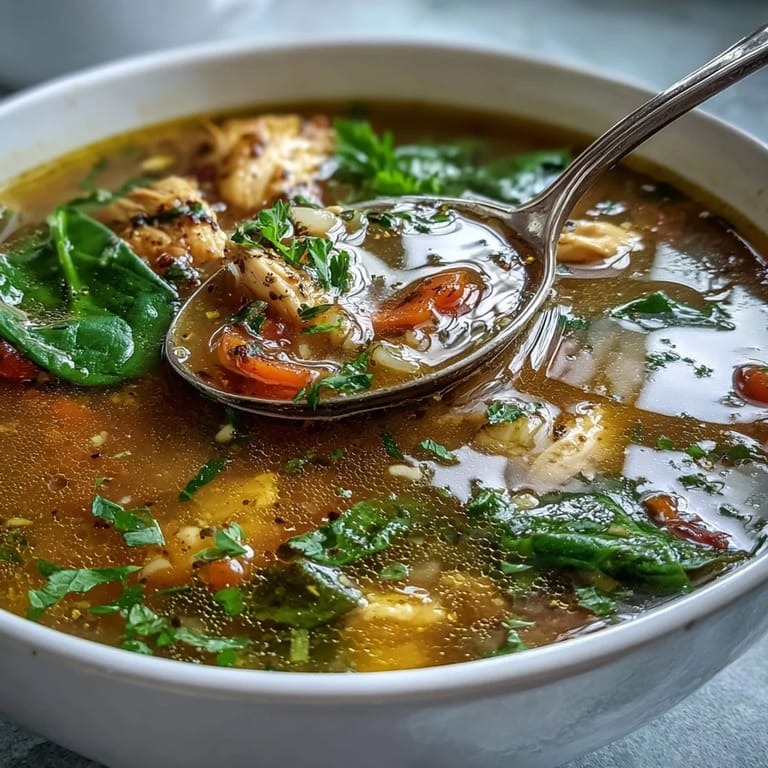
 Make this soup when someone needs it, or when you need it, and notice how a single bowl can shift everything. It's the kind of dish that reminds you why cooking matters.
Fragen und Antworten zum Rezept
- → Wie lange hält sich die Suppe im Kühlschrank?
Die Hähnchen-Perlgersten-Suppe hält sich verschlossen im Kühlschrank bis zu 4 Tage. Die Perlgerste saugt beim Lagern etwas Flüssigkeit auf, sodass Sie vor dem Servieren etwas Brühe oder Wasser hinzufügen können.
- → Kann ich die Suppe einfrieren?
Ja, diese Suppe lässt sich hervorragend einfrieren. Füllen Sie sie in geeignete Behälter und lassen Sie etwa 1-2 cm Platz oben, da Flüssigkeiten beim Gefrieren ausdehnen. Im Gefrierfach hält sie sich bis zu 3 Monaten.
- → Welche Alternativen gibt es zu Perlgerste?
Statt Perlgerste können Sie Dinkel, Hirse, braunen Reis oder Quinoa verwenden. Beachten Sie, dass die Garzeiten variieren können – brauner Reis benötigt beispielsweise etwas länger als Perlgerste.
- → Wie kann ich die Suppe vegetarisch zubereiten?
Für eine vegetarische Version ersetzen Sie das Hähnchen durch gekochte Kichererbsen oder weiße Bohnen und verwenden Sie stattdessen Gemüsebrühe. Die Gewürzmischung bleibt unverändert.
- → Warum wird Kurkuma in dieser Suppe verwendet?
Kurkuma verleiht der Suppe nicht nur ihre charakteristische goldene Farbe, sondern wirkt auch entzündungshemmend und stärkt das Immunsystem. In Kombination mit schwarzem Pfeffer wird die Aufnahme der Wirkstoffe verbessert.
- → Welches Brot passt dazu?
Ein frisches, knuspriges Vollkornbrot oder ein Baguette passen hervorragend zu dieser Suppe. Sie können auch Knoblauchbrot oder Naan-Brot servieren.