 Merken
 There's something about spring that makes me crave green things, and this soup arrived in my kitchen on one of those days when the farmer's market was overflowing with courgettes and I had no idea what to do with half of them. A friend mentioned she'd been making pea soup, and somewhere between her description and my own wandering thoughts, this vibrant bowl came together, tasting like the season itself with that swirl of basil pesto catching the light.
I made this for my neighbour one cool evening when she stopped by with wine, and watching her face light up when I swirled the pesto through was the moment I knew this would become a regular in my rotation. She asked for the recipe before finishing her bowl, which was all the confirmation I needed.
Ingredients
- Olive oil: Two tablespoons is enough to gently coax flavour from your onion and garlic without making the soup heavy.
- Onion and garlic: The aromatic foundation that turns simple vegetables into something with actual depth.
- Courgettes: Choose smaller ones if you can—they have fewer seeds and a more delicate flavour that doesn't overpower the peas.
- Peas: Frozen work beautifully here and often taste fresher than fresh ones that have been sitting around, so don't hesitate to use them.
- Potato: This acts as a quiet thickener, giving the soup body without needing cream or flour.
- Vegetable stock: One litre is the starting point, but taste as you go—some stocks are saltier than others.
- Salt and black pepper: Season at the end when you can actually taste what you're making, not before.
- Basil pesto: A good spoonful per bowl transforms this from nice to memorable, so don't skimp or skip it.
- Crème fraîche or Greek yogurt: Optional, but it adds a cooling richness that balances the pesto's intensity.
Tired of Takeout? 🥡
Get 10 meals you can make faster than delivery arrives. Seriously.
One email. No spam. Unsubscribe anytime.
Instructions
- Warm your oil and soften the onion:
- Pour the olive oil into a large saucepan over medium heat and listen for that gentle sizzle as you add your finely chopped onion. Let it cook for three to four minutes, stirring now and then, until the edges turn translucent and the kitchen starts to smell like something worth eating.
- Invite in the garlic:
- Add your minced garlic and stir it through for about a minute until the aroma shifts from sharp to honeyed. This is the moment when you know your foundation is ready.
- Add the vegetables:
- Toss in your diced courgettes and potato, letting them cook together for about five minutes while you stir occasionally. They won't soften completely yet, but they'll start to release their sweetness into the pan.
- Pour in the stock and simmer:
- Add your vegetable stock and bring everything to a gentle boil, then lower the heat to a simmer. Let it bubble away for about ten minutes until the potato is nearly tender and the courgettes have begun to soften.
- Finish the vegetables:
- Stir in the peas and continue simmering for five more minutes until all the vegetables are completely tender and the peas have thawed through. The soup should smell grassy and fresh now.
- Blend until smooth:
- Remove from the heat and use an immersion blender to purée everything into a silky consistency, or carefully transfer batches to a regular blender if you prefer. Work in batches if using a blender to avoid overflow.
- Season and reheat:
- Taste the soup now and add salt and pepper gradually, knowing that you'll be adding pesto which carries its own salt. Reheat gently if needed, but don't let it bubble hard or the colour will begin to fade.
- Serve with the swirl:
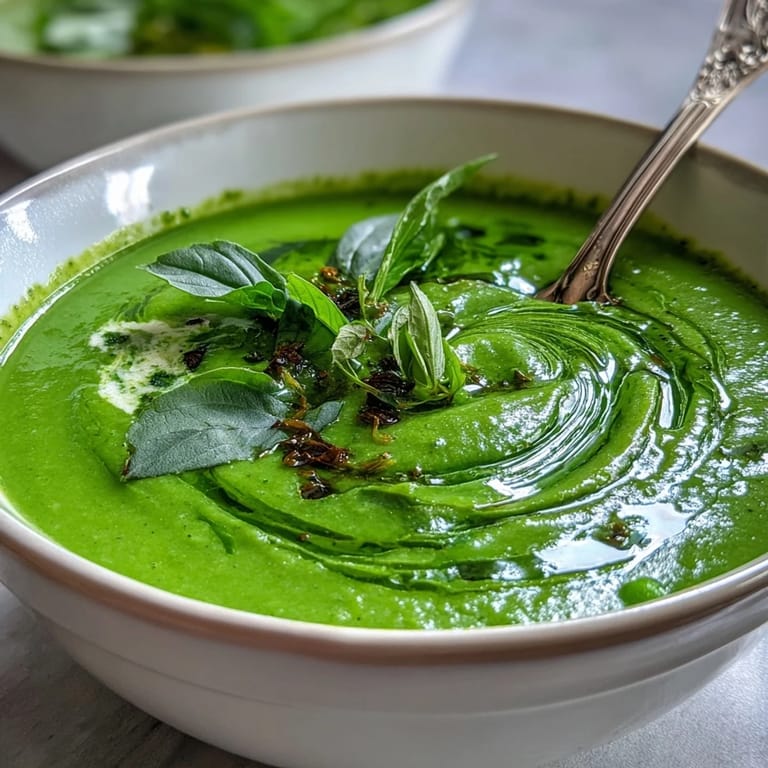
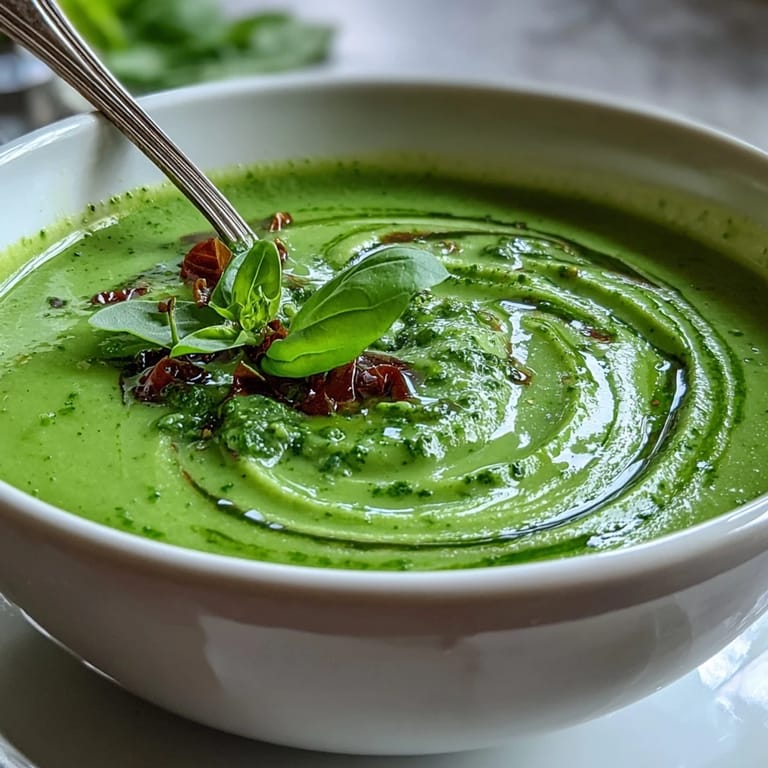
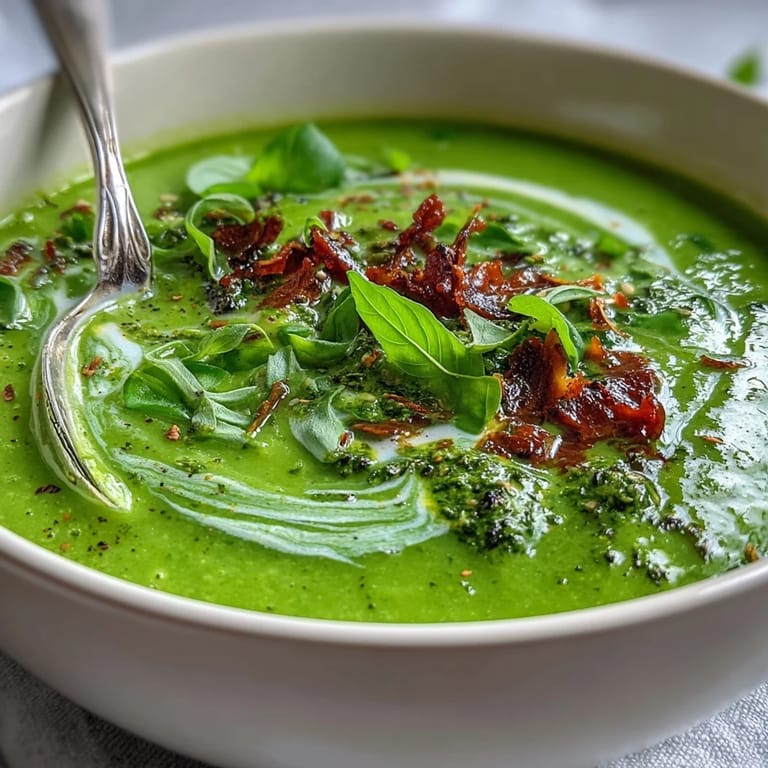
- Ladle the soup into bowls and spoon about a tablespoon of pesto into the centre of each one, creating that beautiful green river through the pale soup. Add a dollop of crème fraîche or yogurt if you like, and scatter fresh basil leaves if you have them.
 Merken
 The first time someone asked me for seconds was when I understood that simple vegetables, treated with attention and finished properly, can be just as satisfying as anything more complicated. There's quiet confidence in a bowl of soup that tastes exactly like itself.
The Secret of the Swirl
The pesto is not a garnish here—it's the finale, the thing that turns a nice soup into one you'll remember. I learned this by mistake once when I stirred the pesto in too early, and while it was still delicious, something about the moment of swirling it in just before eating made the whole experience feel more intentional. If you're making your own pesto, use fresh basil if at all possible, and don't be shy with the garlic and lemon juice because you want it bold enough to sing through the soup without tasting overwhelming.
When to Use Fresh Versus Frozen Peas
Fresh peas in their pods are a treasure, but frozen peas are often picked at peak ripeness and frozen immediately, which means they're sweeter and more flavourful than fresh ones that have traveled and sat in storage. I use frozen almost always for this soup unless I'm making it during high summer when the farmer's market peas are so young they barely need cooking. The texture and taste are nearly identical once blended, and the frozen ones are more forgiving if you accidentally overcook them.
Making It Your Own
This soup is a canvas, and I've made it differently each time I've cooked it, depending on what was in my kitchen and what mood I was in. One evening I added a handful of spinach for extra depth, another time I swapped the courgettes for asparagus because that's what needed using. The structure stays the same, but the details can shift with the season and your preferences.
- Asparagus, spinach, or even broccoli can replace some of the courgette while keeping the soup fresh-tasting and spring-like.
- A small splash of white wine or lemon juice added before blending brings brightness that cuts through the richness of the pesto beautifully.
- If you prefer a brothier soup, simply use less blended vegetable or add more stock, and remember you can always blend less of it for a chunky version if you'd rather.
 Merken
 This soup reminds me that some of the most satisfying meals are built on restraint, on letting good ingredients speak for themselves rather than competing with one another. It's the kind of dish I keep coming back to, season after season.
Fragen und Antworten zum Rezept
- → Kann ich die Suppe einfrieren?
Ja, die pürierte Suppe ohne Pesto lässt sich hervorragend bis zu 3 Monate einfrieren. Das Pesto und Crème fraîche erst beim Auftauen und Servieren hinzufügen.
- → Wie mache ich die Suppe vegan?
Verwenden Sie rein pflanzliches Pesto ohne Käse, lassen Sie Crème fraîche oder Joghurt weg, oder greifen Sie zu veganen Alternativen auf Pflanzenbasis.
- → Welche Gemüsealternativen passen gut?
Statt Zucchini können Spargel, Spinat oder Brokkoli verwendet werden. Die Kartoffel bleibt wichtig für die Bindung und Cremigkeit der Suppe.
- → Wie lange bleibt die Suppe im Kühlschrank frisch?
Die abgekühlte Suppe hält sich in einem verschlossenen Behälter bis zu 4 Tage im Kühlschrank. Vor dem Servieren vorsichtig erwärmen.
- → Kann ich frisches Basilikum verwenden?
Frisches Basilikum eignet sich hervorragend für selbstgemachtes Pesto. Alternativ können Basilikumblätter als Garnitur über die fertige Suppe gestreut werden.
- → Wie kann ich die Suppe sämiger machen?
Eine zusätzliche Kartoffel oder ein Schuss Sahne während des Pürierens sorgt für noch mehr Cremigkeit. Auch etwas mehr Pesto verleiht mehr Körper.